A Startup from Biel/Bienne turns household waste into design pieces. And ideally, customers don't even notice.
By Jessica Woodtli
Published on 27 September 2024 in Bieler Tagblatt / à jour
From Low-Grade to High-Quality
A flower pot made from yoghurt pots, toothpaste tubes and children's toys? A lamp? Or even an entire table? At Kontrollstrasse 8 in Biel, the waste that people throw into plastic collection bags is transformed into design objects. That's where the startup Enga has its headquarters.
Proving There's Another Way
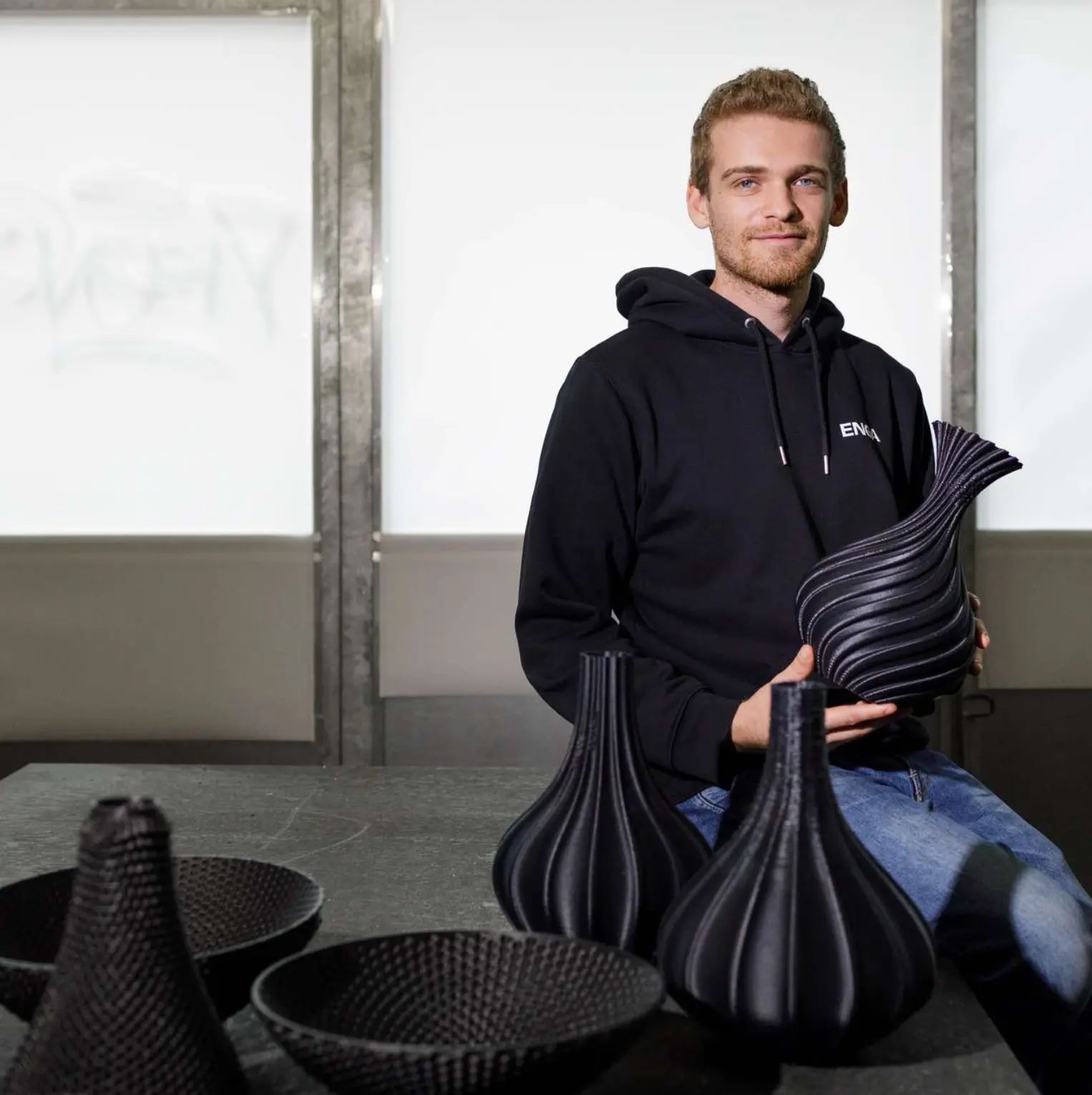
"In industry, I saw how many products are manufactured as cheaply as possible and with quality that's only just good enough," explains Gildas Höllmüller, Enga's founder. He's a trained design engineer who worked for nine years in the machinery and aerospace industries. "Most manufacturers only want to make profit and encourage people to consume as much as possible."
This critical view of consumer society, combined with the global plastic problem, gave Höllmüller the motivation to found his own company. And to prove that there's another way. "I wanted to develop a circular system that doesn't just recycle once, but also creates genuinely high-quality products from plastic waste," says the 27-year-old.
The plastic collection bags, which are being introduced in more and more municipalities and cities as a supplement to collections like cardboard, PET and batteries, are meant to counter the plastic problem – particularly the still excessive incineration of household plastic waste today. But what actually happens to the waste that ends up in them? Users of the bags remain in the dark about this. And that's what the startup, founded in 2022, wants to change.
From Yoghurt Pot to Design Object
The waste from plastic collection bags goes to a recycling plant and is first washed and sorted by plastic type. Unlike PET collections, for example, plastic waste arrives mixed and dirty. Metal blades from disposable razors need to be sorted out, milk residue in yoghurt pots washed away. Then everything is reduced in size, regranulated – that is, melted into small pellets – and coloured. "These small pellets then come back to us in Biel," explains Höllmüller.
There are various plastic collection bags in Switzerland. Enga works with Kunststoff-Sammelsack Schweiz GmbH. This bag is available in many municipalities and cities in eastern Switzerland, but unfortunately not yet in Biel. The advantage of this bag is that the entire recycling process is carried out in the same plant, says Höllmüller. With the Biel bag, however, the recycling process is distributed across different plants.
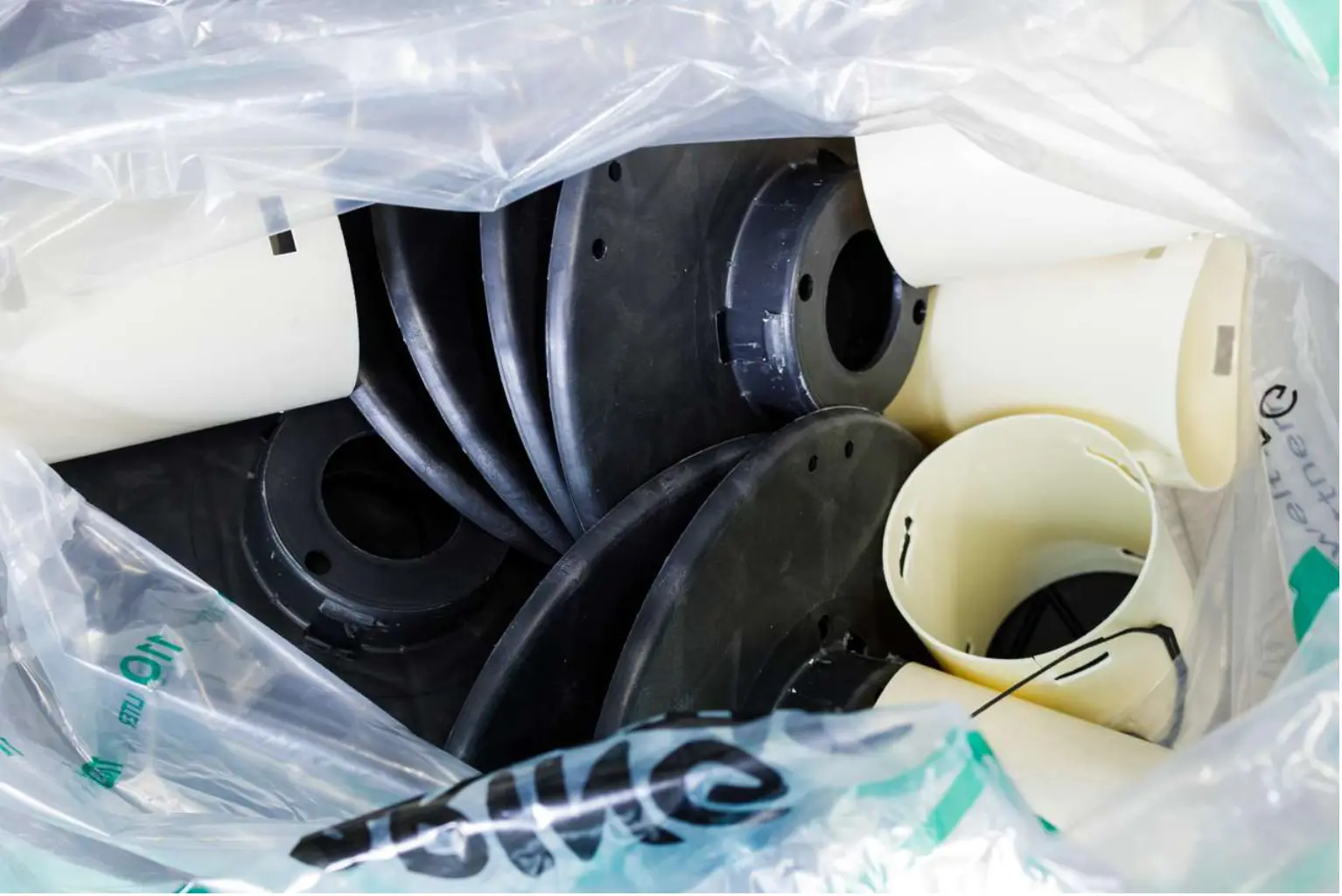
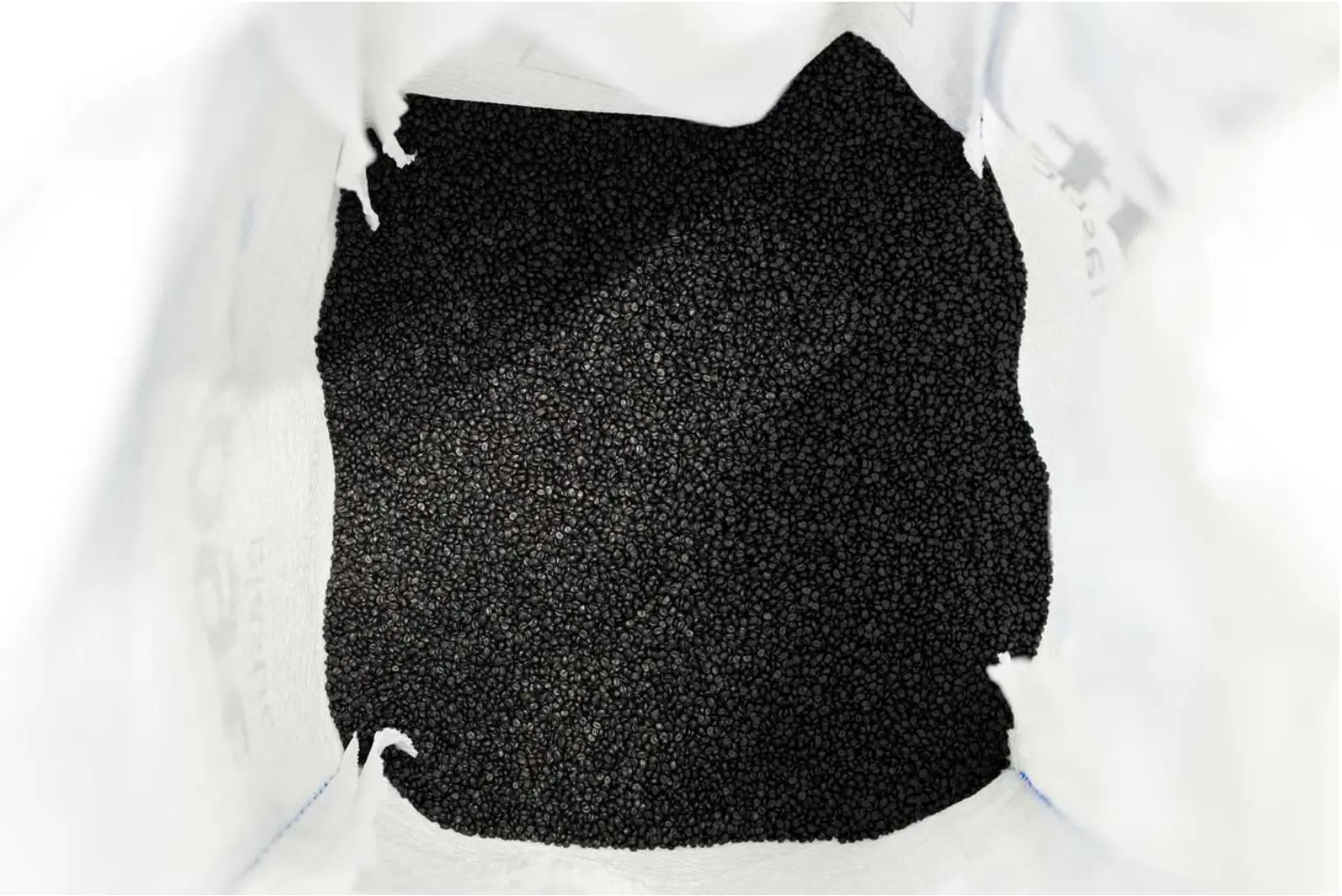
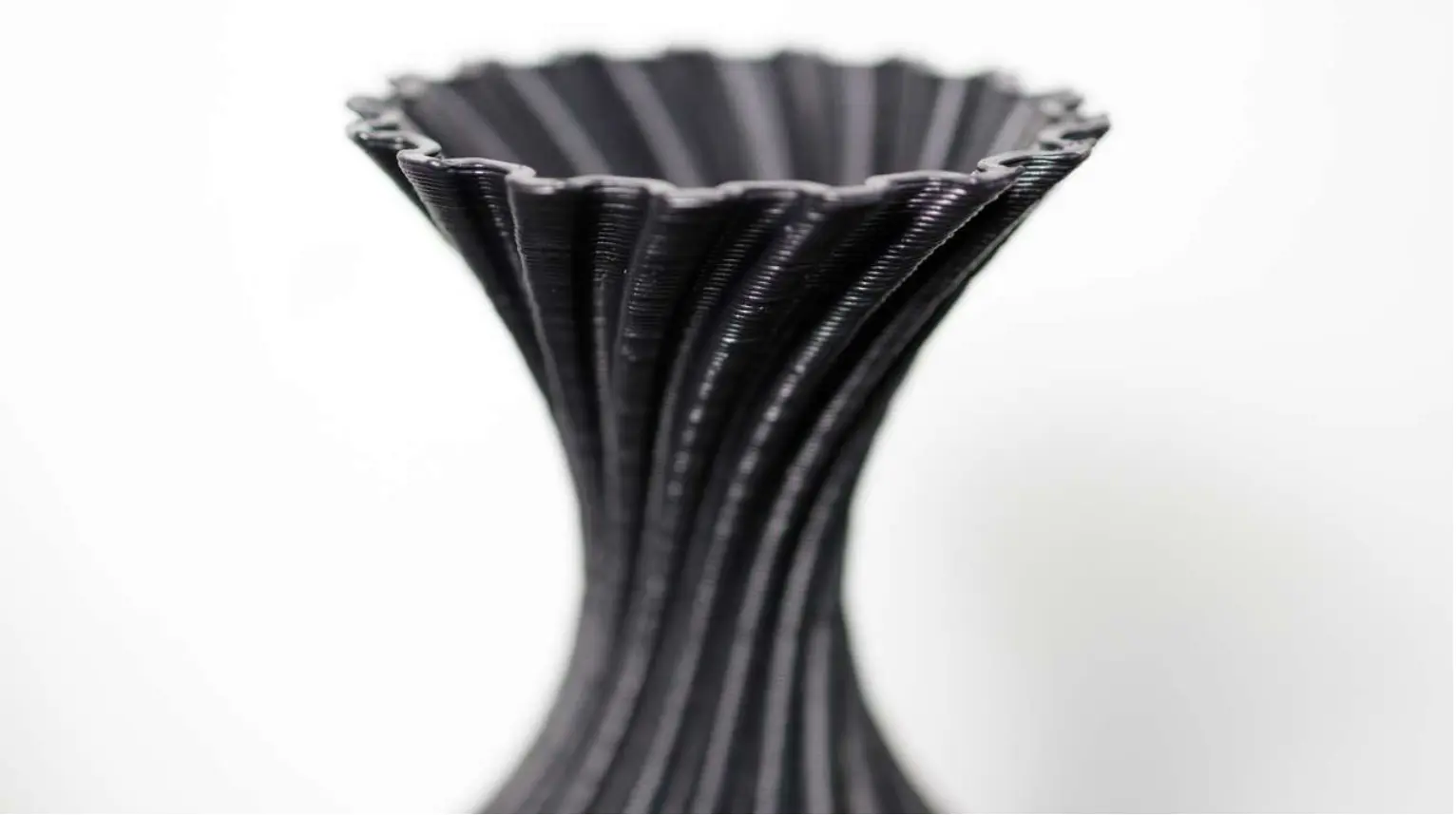
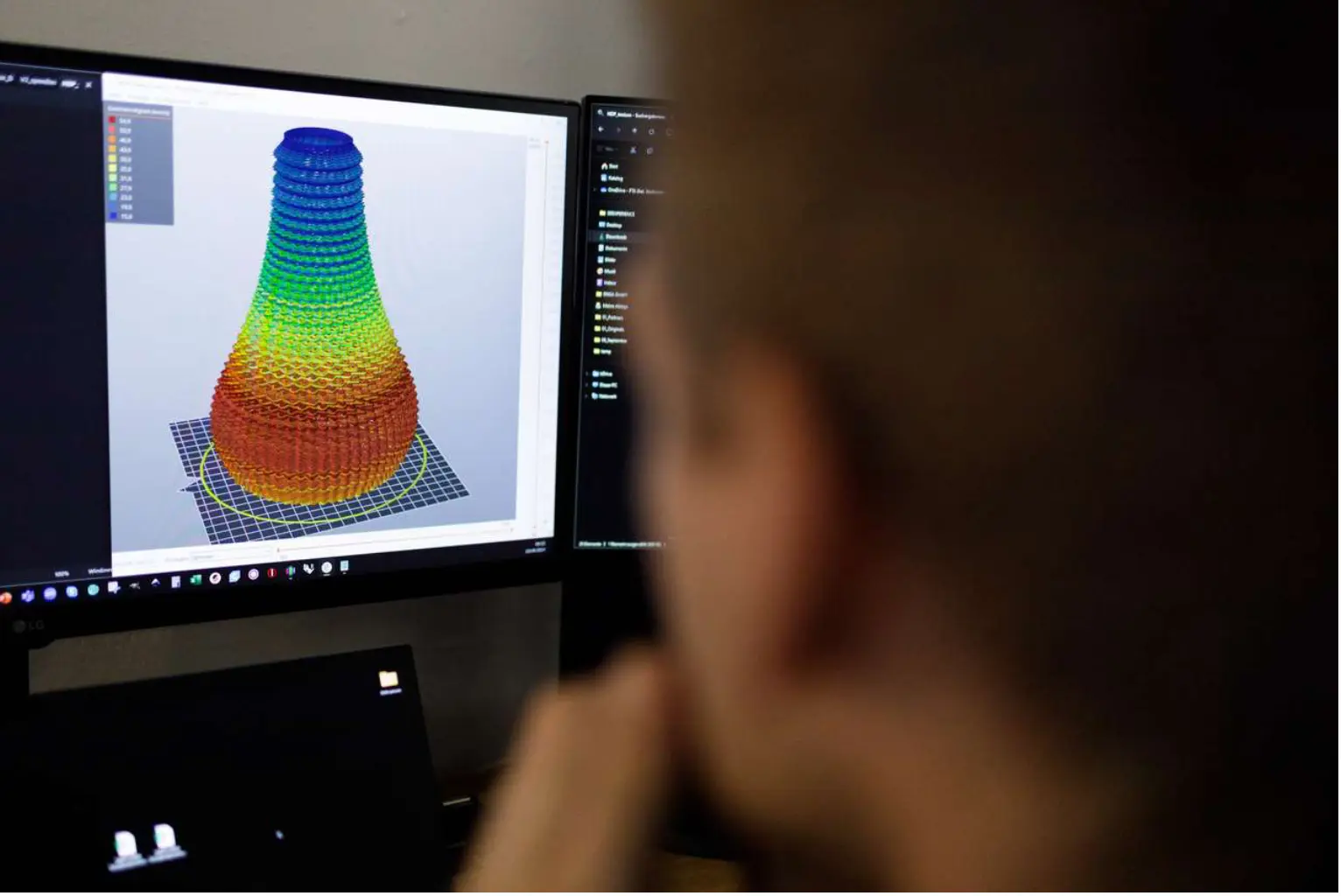
- The household waste in the plastic collection bags is sorted and washed at a plant ... and melted down into small pellets. These are then sent back to Biel.
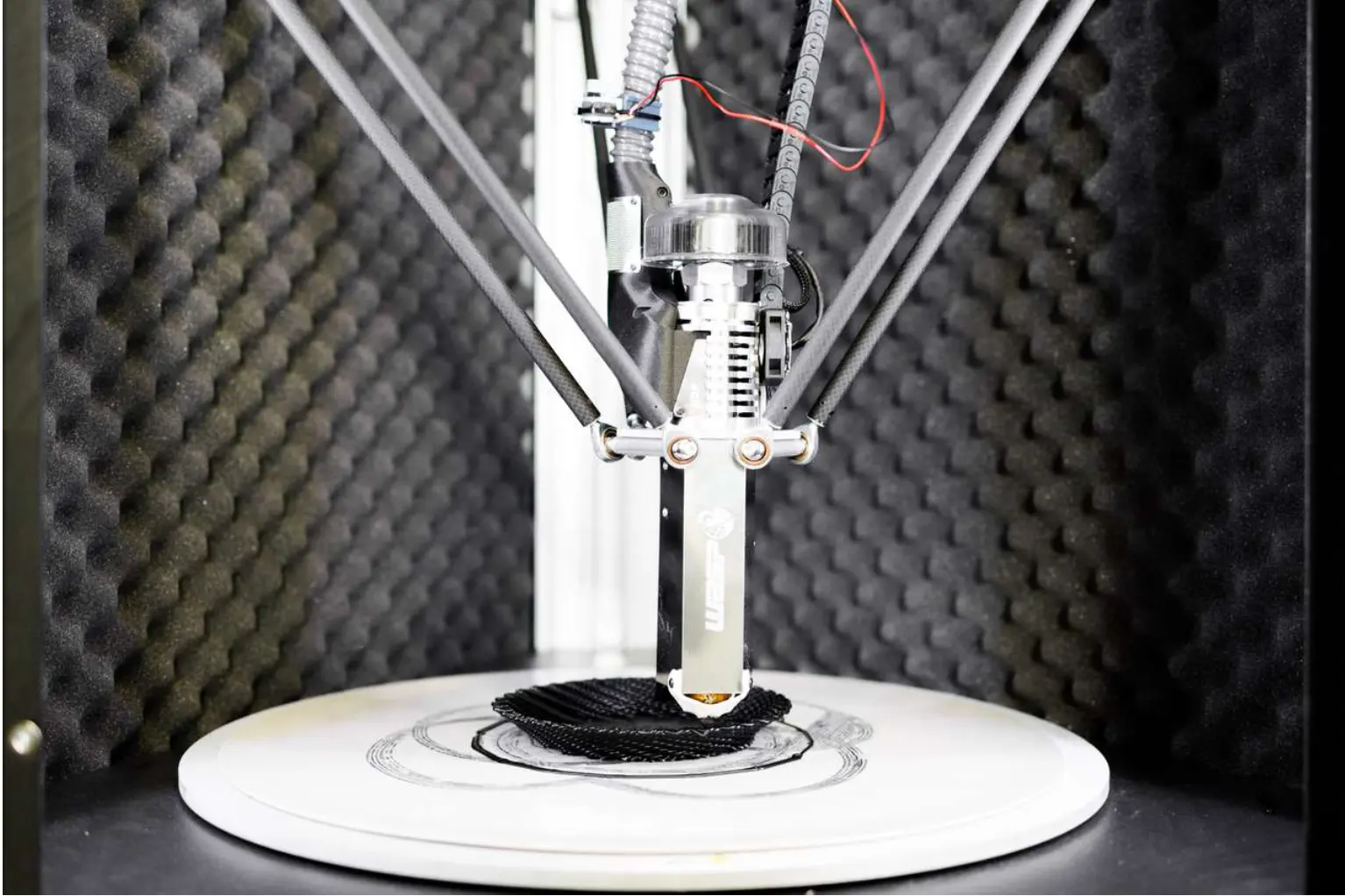
- Line by line, the 3D printer turns the small granulate pellets into flower pots, lamps and entire pieces of furniture. The lines give a special structure.
- Before the 3D printer can get to work, Gildas Höllmüller designs the object.
(Fotos Nik Egger)
From the granulate, he and his small team finally manufacture the end products using 3D printers. Flower pots, lamps and entire pieces of furniture.
"Thus we close the loop: from the plastic waste that people have at home, a new product is created that goes back to the people," says the young entrepreneur. And should this product no longer be needed or break, it comes back into this cycle: either people throw it in the collection bag or visit Enga personally with it. Repair and take-back service belongs just as much to it as the recycling process and product itself, according to Höllmüller.
Enga Versus Conventional Recycling
The founder is aware that many products on today's market advertise with the "recycled" label. However, Enga distinguishes itself from these in several ways.
Many of these products consist only partially of recycled plastic, explains Höllmüller. Furthermore, many companies use industrial waste for their recycling products, he continues. This is good and important. He also started this way. But because industrial waste is easier to recycle than household waste – it usually arrives clean and uniformly coloured – hardly any company yet dedicates itself to household waste to make high-quality products from it.
Moreover, recycling often consists of making a bottle into a bottle again, or making plates hidden in walls or cable sheathings from hundreds of bottles – cheap products where quality doesn't play a major role, or which aren't even visible to people. "These types of recycling are a good thing, but only solve a small part of the plastic problem," says Höllmüller.
And so Enga goes beyond conventional recycling approaches. Enga doesn't want to hide its products, but make them visible. "The goal is to manufacture products that are no longer associated with waste," says the entrepreneur.
Unexpected Customer Reactions
Originally, he thought his products would mainly appeal to people who have a strong awareness of sustainability. However, he quickly discovered that many customers aren't interested in sustainability at all, "but simply think the products are cool".
"That's doubly winning for us," says Höllmüller. It shows that the products are well-received independent of environmental issues and can compete with the competition. Moreover, when people buy them, they're given the story behind the object. And so perhaps next time they'll think twice about which rubbish bag they dispose of their toothbrush in.
A Business Model That Works?
The next step happens in product development. Still this year, Enga will begin collaborating with young, local designers to work on new product lines – so far the trained design engineer has designed all products himself. "But I'll still have a say in future," he says, adding: "Especially in manufacturing and repairability."
It's clear that the small Biel startup still has much work to do in the coming years – the mountains of waste are becoming larger rather than smaller. "I look forward to the day when I have to set up a new business model with Enga because it means there's no more plastic to recycle," says Höllmüller, adding: "But we know that will take a very long time yet."
Product Range
The products are available both in the online shop and in shops in Biel and Nidau. They're also available in a pop-up store in the city centre and by appointment at Kontrollstrasse 8, the small company's headquarters.
Currently, Enga's range includes products like flower pots and lamps in various sizes and colours. The smallest pot costs 19 francs, the largest lamp 299. For bespoke requirements, Enga offers custom manufacturing – from waste bins to chairs, benches and tables, right through to washbasins and bathroom shelving.
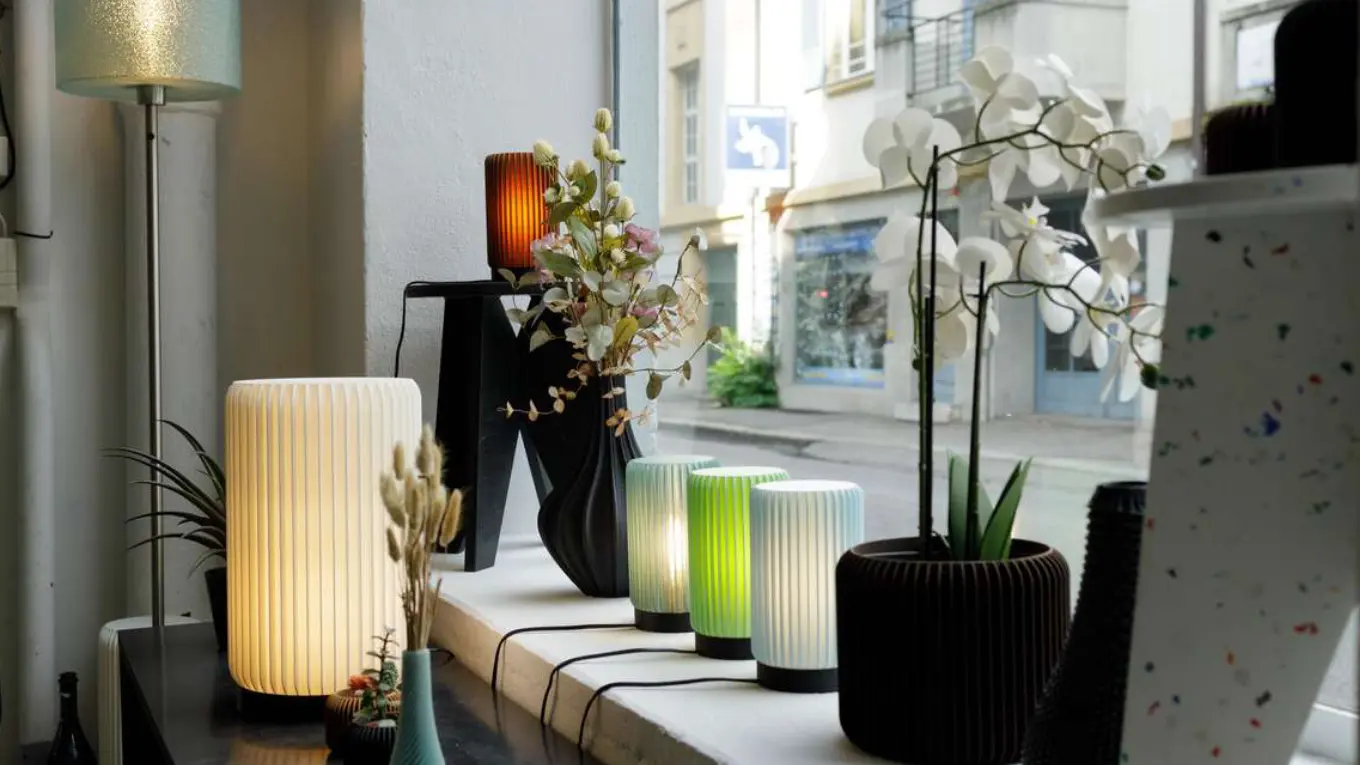
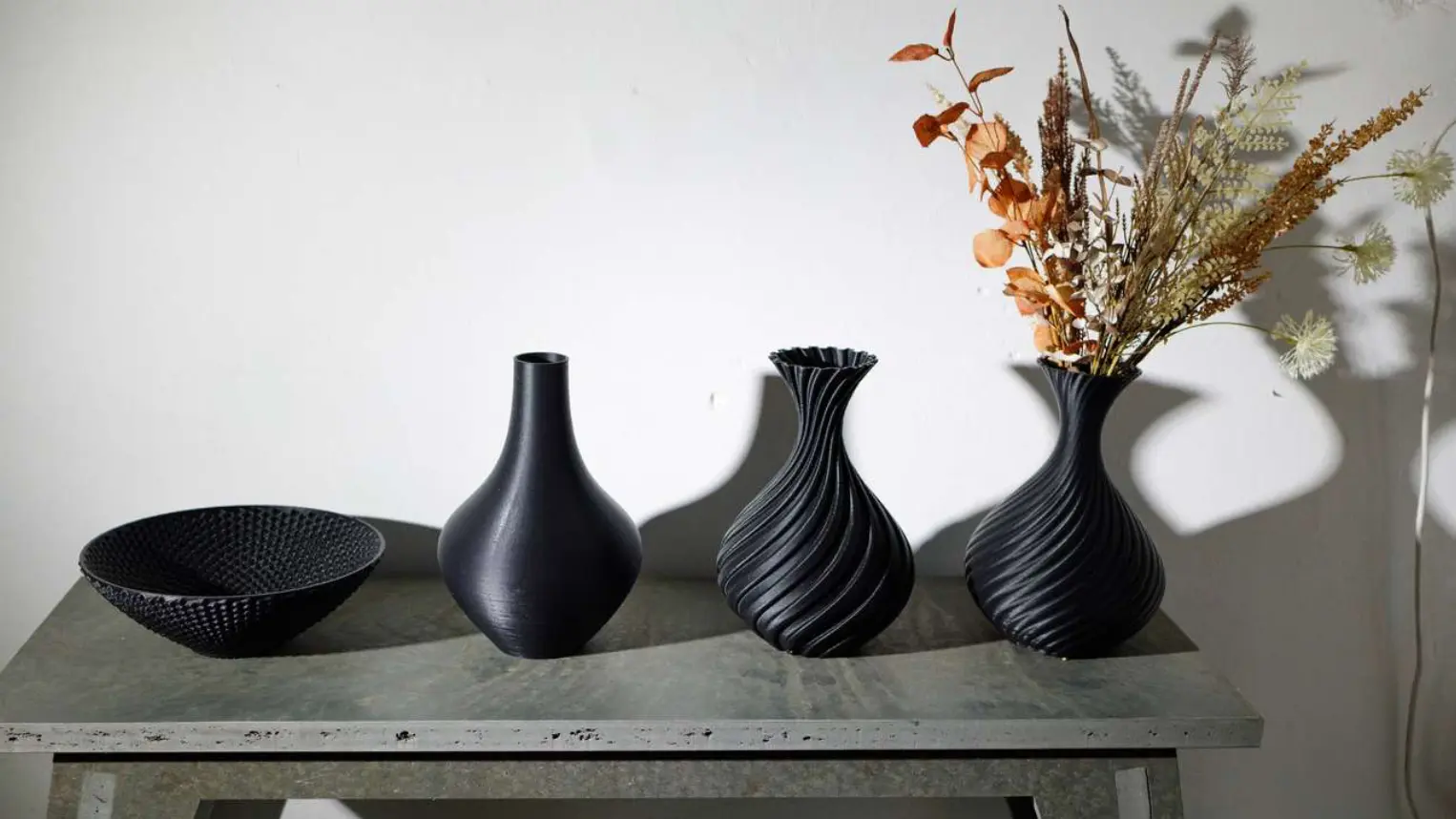
There are several items in the window of the small shop with its adjoining workshop. Not only are the bowl and vases made from recycled resources, but so is the bench. (Fotos Nik Egger)
Growing Mountains of Waste
Since the 1950s, when plastic was first used for producing everyday objects, annual global plastic production has risen to over 460 million tonnes in 2019, according to a report by the Organisation for Economic Co-operation and Development (OECD). This figure has almost doubled since 2000.
In Switzerland, annual plastic consumption is around one million tonnes according to the Federal Office for the Environment (FOEN) – that corresponds to roughly 120 kilograms per person. The problem arises mainly at the end of plastic products' lifecycle: around 80 per cent of plastic waste is still incinerated, according to FOEN. A good third of the incinerated plastic waste comes from private households.